This post may contain affiliate links. As an Amazon Associate, we earn from qualifying purchases at no extra cost to you.
There's a reason scientists call them "forever chemicals."
PFAS — short for per- and polyfluoroalkyl substances — are a family of thousands of synthetic chemicals that don't break down in the environment. They don't break down in your body either. They just accumulate. The CDC has found PFAS in the blood of nearly all Americans tested, including children.
The Environmental Working Group (EWG) has been tracking PFAS contamination for years, and the picture they've assembled is uncomfortable: these chemicals are hiding in places most people would never think to check — your frying pan, your microwave popcorn bag, your rain jacket, your dental floss.
The good news is that you can reduce your exposure meaningfully with a handful of practical swaps. You won't eliminate PFAS completely — nobody can — but you can lower your load.
What Are PFAS, Exactly?
PFAS are a class of over 12,000 synthetic chemicals that share a carbon-fluorine bond — one of the strongest bonds in chemistry. That's what makes them so durable. It's also what makes them so problematic.
They were originally developed in the 1940s, and DuPont's Teflon (PTFE) was one of the earliest commercial applications. From there, the technology spread. Stain-resistant fabrics. Waterproof coatings. Grease-resistant food packaging. Firefighting foam. Cosmetics.
Today, PFAS are nearly everywhere — in the water supply of hundreds of communities, in soil near industrial sites and military bases, and in the bodies of virtually everyone on the planet.
Ongoing research links PFAS exposure to a range of health concerns: disrupted hormone function, immune system effects, liver stress, and elevated cholesterol levels. Regulatory agencies and independent researchers continue to study the full picture, and while the science is still developing, the EWG's position is consistent — there is no safe level of exposure to these chemicals.
Where PFAS Hide in Everyday Life
This is where most people are surprised. PFAS aren't just a "industrial contamination" story. They're in your home right now, across multiple product categories.
Nonstick Cookware
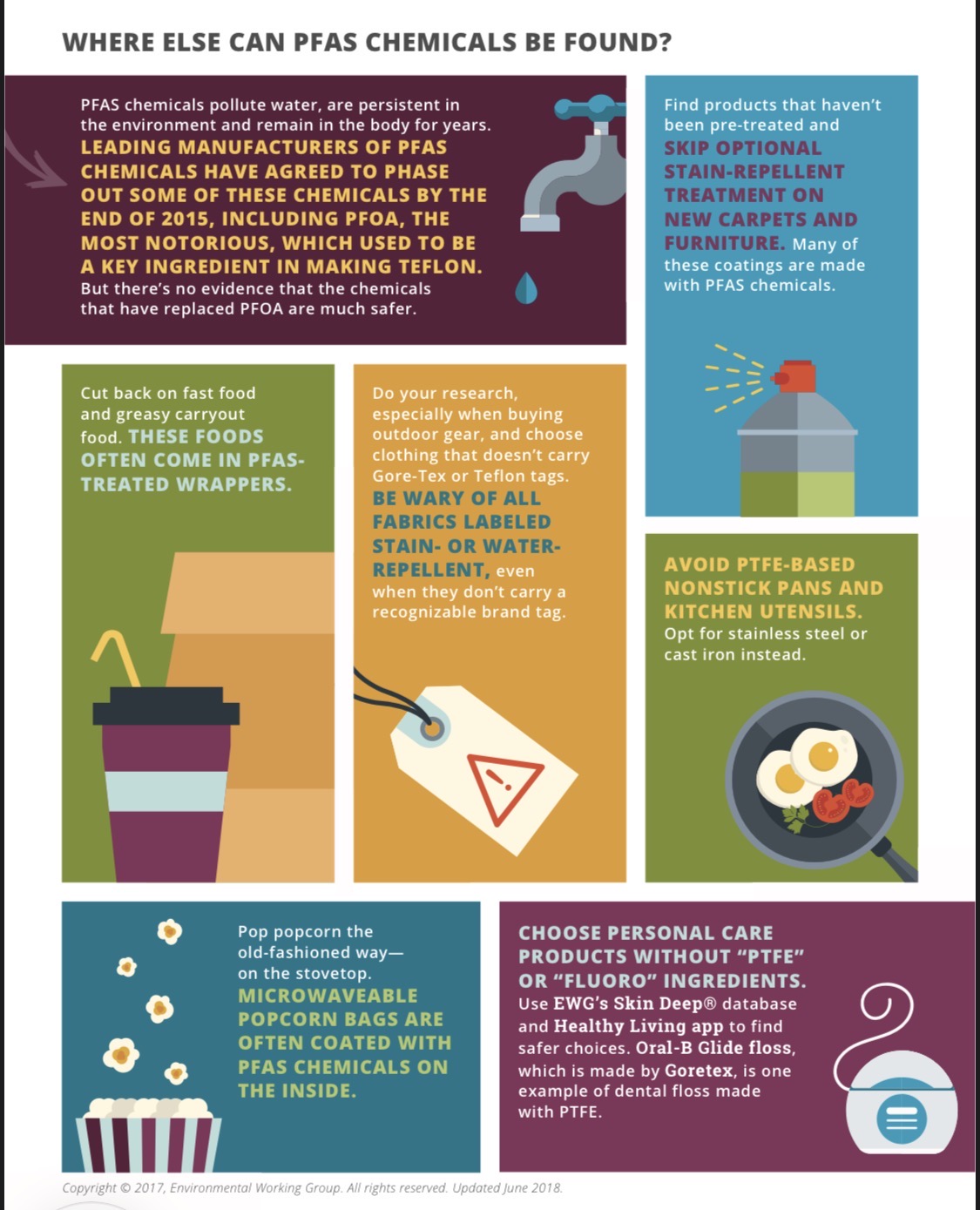
The original PFAS product. PTFE — marketed as Teflon — is the coating on most nonstick pans. When the coating is heated to high temperatures, it can release fumes. When it scratches or flakes over time, fragments can end up in your food. Many "PFOA-free" nonstick pans still use other PFAS compounds as replacements.
Food Packaging and Fast Food Wrappers
Grease-resistant packaging — the wrappers on your fast food burger, the inside of your microwave popcorn bag, the lining of some pizza boxes — is often treated with PFAS to repel oil and moisture. EWG research found PFAS in wrappers from major fast food chains. The chemical leaches from the packaging into the food, particularly when the food is hot.
Stain-Repellent Clothing and Outdoor Gear
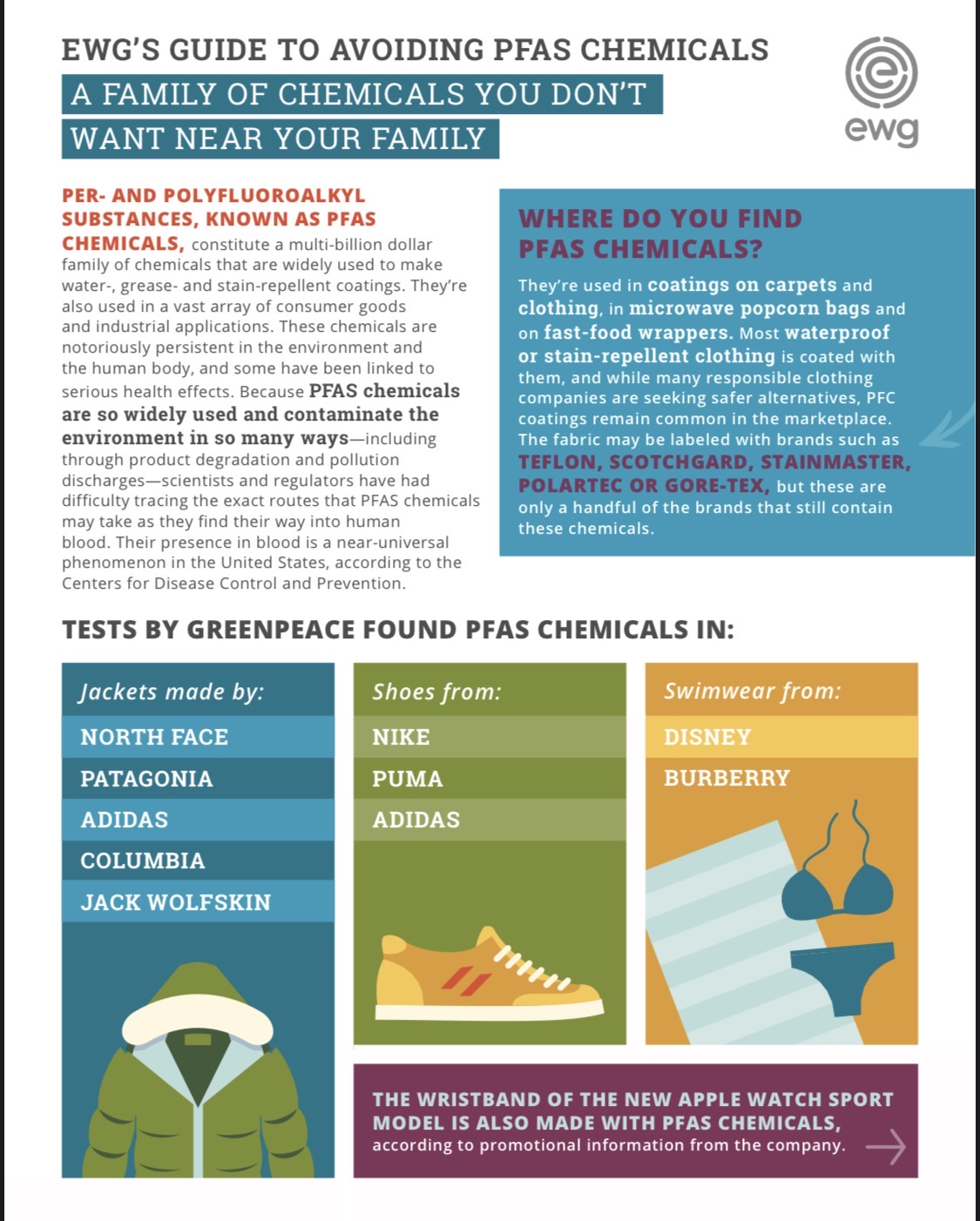
This one catches people off guard. Outdoor brands have built entire product lines around "durable water repellent" (DWR) coatings — and most of those coatings have historically been PFAS-based. Greenpeace research found PFAS in jackets from The North Face, Patagonia, Adidas, and Columbia. Nike, Puma, and Adidas shoes. Swimwear from Disney and Burberry. Even the Apple Watch Sport wristband tested positive.
The good news is that many brands have committed to phasing out PFAS from new products, with timelines running through 2025–2027. But inventory from before those commitments is still being sold.
Carpet and Furniture Treatments
Scotchgard, Stainmaster, and similar stain-resistant treatments sprayed on carpets, sofas, and rugs are typically PFAS-based. Children who play on treated carpets have measurably higher PFAS body burdens in studies. The treatment off-gases and sheds over time, ending up in household dust.
Personal Care Products
The FDA has identified over 50 PFAS ingredients intentionally added to approximately 1,700 personal care products. The most common is PTFE, used as a texture agent in foundations, powders, and some skincare products. Look for "PTFE," "perfluoro," or "fluoro" anywhere in the ingredient list — those are PFAS flags.
Dental Floss
Specifically, Oral-B Glide floss and similar products with a slippery coating. Studies have found higher PFAS blood levels in people who use these products. Plain waxed floss, silk floss, or water flossers don't carry the same risk.
7 Practical Steps to Reduce Your PFAS Exposure
Complete avoidance isn't realistic. But targeted swaps in the highest-exposure categories can meaningfully reduce your overall load. Here's where to start.
1. Swap Your Cookware
This is the highest-leverage swap in the kitchen. Ditch nonstick pans with PTFE coatings and switch to:
- Cast iron — nearly indestructible, improves with use, zero synthetic coatings
- Stainless steel — great for most cooking with the right technique
- Ceramic-coated cookware — a cleaner nonstick option; look for products explicitly labeled PTFE-free, PFOA-free, and PFAS-free
Browse our kitchen essentials for certified-clean cookware options.
2. Switch Your Cutting Board
Plastic cutting boards don't contain PFAS directly, but they do shed microplastics into your food. More importantly, this is an easy win: wood, bamboo, and teak cutting boards are naturally antimicrobial, durable, and completely plastic-free. Check our home essentials collection for wood and bamboo options — including our top-rated bamboo and teak sets.
3. Use Glass Containers for Food Storage
Plastic food storage containers often contain other concerning chemicals, and the interaction of PFAS with fatty or hot foods is where the most transfer happens. Switching to glass containers for meal prep and leftovers removes that pathway entirely.
Our home essentials collection includes glass food storage sets explicitly certified free of PTFE, PFOA, PFAS, and BPA — a straightforward upgrade with long-term value.
4. Cut Back on Fast Food
It's not just the food — it's the wrapper. Grease-resistant packaging from fast food restaurants is one of the most consistent dietary sources of PFAS. Reducing how often you eat packaged fast food (especially hot, greasy items served in wrappers) meaningfully lowers that exposure route.
5. Skip Microwave Popcorn — Pop It Yourself
The bags are the problem. Microwave popcorn bags use PFAS liners to resist grease. Stovetop popping in a regular pot with coconut oil or a dash of olive oil takes about the same time and eliminates the PFAS source entirely. Air poppers work too.
6. Check Clothing Labels Before You Buy
Avoid items tagged as "stain-repellent," "water-resistant," or "Gore-Tex / Teflon treated" — these are the giveaways for PFAS-based DWR coatings. When you need waterproof performance, look for brands explicitly advertising PFAS-free DWR technology (there are now several options available). For everyday wear, untreated natural fabrics — cotton, linen, wool — carry no PFAS risk.
7. Read Personal Care Labels
The words to look for: PTFE, polytetrafluoroethylene, perfluorooctyl triethoxysilane, or anything with "fluoro" or "perfluoro" in the name. These are PFAS ingredients used intentionally in cosmetics, foundations, sunscreens, and skincare products. The EWG's Skin Deep database is a free tool for checking specific products.
Browse our body care collection for products vetted against these ingredients.
What About PFAS in Tap Water?
PFAS contamination in drinking water is widespread — EWG has documented it in hundreds of communities across the US. If you're on a municipal water supply near industrial areas, military bases, or fire training sites, your water may have elevated PFAS levels.
The solution is a water filter certified to remove PFAS. Reverse osmosis filters and some activated carbon filters (particularly PFAS-specific granular activated carbon) are effective. Standard pitcher filters like Brita are generally not certified for PFAS removal. The EWG's water filter guide has current recommendations.
The Bottom Line
PFAS are pervasive, persistent, and in nearly everyone's body. You cannot eliminate them entirely — the contamination is too widespread and the products too common.
But you can reduce your exposure significantly by targeting the highest-risk categories: cookware, food packaging, and treated clothing. The swaps aren't complicated. A cast iron pan, a glass food container, and a wood cutting board replace some of the most reliable PFAS pathways in the average kitchen.
The same logic applies here as with microplastics, pesticide residues, and the other environmental exposures we cover on this site: you can't be perfect, but you don't need to be. Small, consistent changes across multiple exposure routes add up meaningfully over time.
This article is for educational purposes only and is not medical advice. Consult a qualified healthcare professional for any health concerns related to chemical exposures or dietary choices.
Ready to start shopping organic? Browse our full curated collection — everything is verified, certified, and actually worth buying.
Shop Organic Products →